PREVALENCE AND FACTORS OF COMMUNITY-ACQUIRED URINARY TRACT INFECTIONS IN CHILDREN CAUSED BY DRUG-RESISTANT MICROORGANISMS AT NAKHON PATHOM HOSPITAL
DOI:
https://doi.org/10.55374/jseamed.v10.279Keywords:
Urinary tract infection, children, antimicrobial resistance, risk factors, ESBL, communityacquired infectionAbstract
Background: Urinary tract infections (UTIs) are a common pediatric condition and a growing concern due to increasing antimicrobial resistance. Identifying risk factors for drug-resistant pathogens and evaluating empirical antibiotic susceptibility are essential for improving treatment outcomes.
Objectives: The study aimed to determine the prevalence of drug-resistant microorganisms causing community-acquired UTIs in children, identify associated risk factors, and assess the susceptibility of empirical antibiotics recommended by Thai national guidelines.
Methods: This retrospective study included children aged 0–15 years with community-acquired UTIs from January 2021 to February 2025. Demographic and clinical data were collected. Categorical variables were summarized as frequencies and percentages. Multivariable logistic regression analysis was performed to identify independent risk factors.
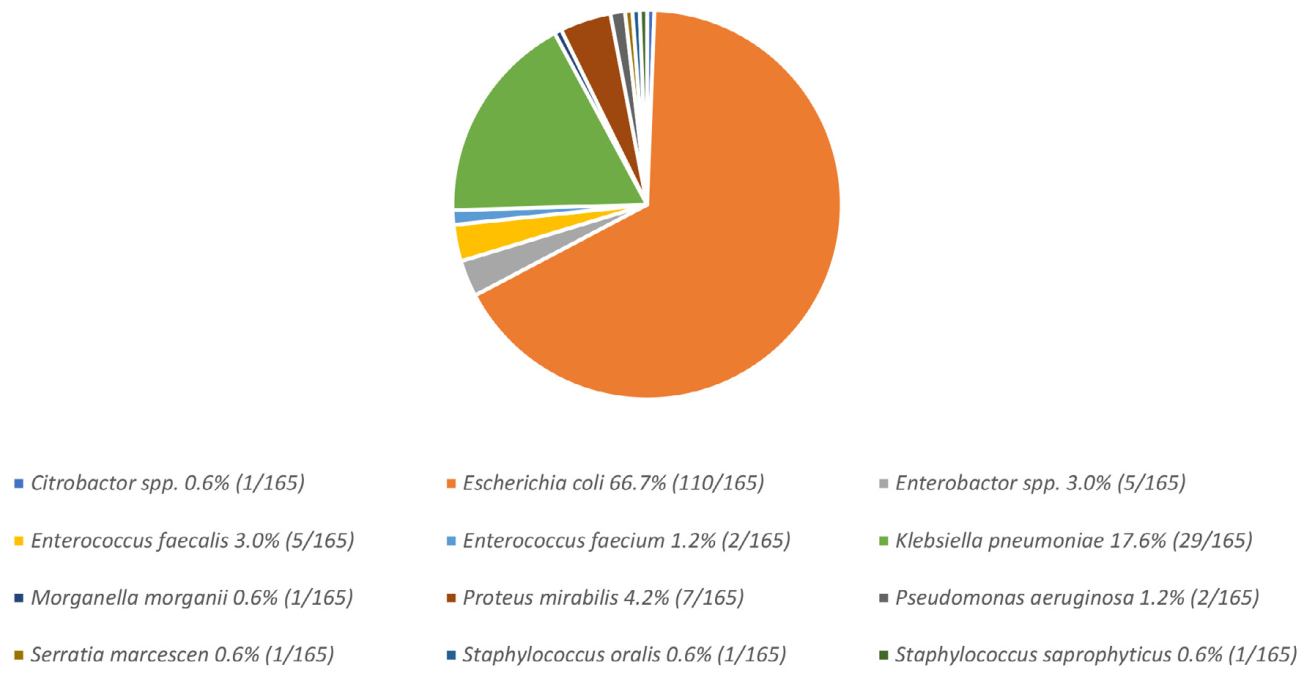
Results: Among 165 patients, Escherichia coli was the most common pathogen (66.7%). Drug-resistant microorganisms were identified in 124 cases (75.2%). Among Enterobacteriaceae isolates, 37% were extended-spectrum β-lactamase producers and 40.9% were multidrug-resistant. Younger age (OR 0.99; 95% CI 0.99–0.99) and a history of recurrent UTIs (OR 6.88; 95% CI 1.57–30.22) were independent risk factors for drug-resistant infections. Male sex and a history of antibiotic treatment within the preceding 30 days were associated with resistance to ceftriaxone and cefotaxime. Amikacin showed the highest susceptibility rate (92.1%), while amoxicillin-clavulanate had the highest susceptibility among oral agents (67.3%).
Conclusions: Drug-resistant microorganisms are highly prevalent in pediatric community-acquired UTIs. Younger age and recurrent UTIs are key risk factors, while male sex and recent antibiotic treatment are associated with resistance to commonly used third-generation cephalosporins. Amikacin demonstrated the highest susceptibility rate among the empirical antibiotic options.
Downloads
References
Mattoo TK, Shaikh N, Nelson CP. Contemporary management of urinary tract infection in children. Pediatrics. 2021; 147: e2020012138. DOI: https://doi.org/10.1542/peds.2020-012138
Shaikh N, Morone NE, Bost JE, Farrell MH. Prevalence of urinary tract infection in childhood: a meta-analysis. Pediatr Infect Dis J. 2008; 27: 302–8. DOI: https://doi.org/10.1097/INF.0b013e31815e4122
O’Brien K, Edwards A, Hood K, Butler CC. Prevalence of urinary tract infection in acutely unwell children in general practice: a prospective study with systematic urine sampling. Br J Gen Pract. 2013; 63: e156–64. DOI: https://doi.org/10.3399/bjgp13X663127
Chaosrikul S. Urinary tract infection in children at Sappasitthiprasong Hospital. Med J Sisaket Surin Buriram Hosp. 2005; 22: 183–93.
Marsh MC, Yepes Junquera G, Stonebrook E, Spencer JD, Watson JR. Urinary tract infections in children. Pediatr Rev. 2024; 45: 260–70. DOI: https://doi.org/10.1542/pir.2023-006017
Montini G, Spencer JD, Hewitt IK. Urinary tract infections in children. In: Pediatric nephrology. 8th ed. Cham: Springer International Publishing; 2022. p. 1323–42. DOI: https://doi.org/10.1007/978-3-030-52719-8_49
Brandstrom P, Hansson S. Urinary tract infection in children. Pediatr Clin North Am. 2022; 69: 1099–114. DOI: https://doi.org/10.1016/j.pcl.2022.07.003
Wang J, He L, Sha J, Zhu H, Huang L, Zhu X, et al. Etiology and antimicrobial resistance patterns in pediatric urinary tract infection. Pediatr Int. 2018; 60: 418–22. DOI: https://doi.org/10.1111/ped.13526
Dayan N, Dabbah H, Weissman I, Aga I, Even L, Glikman D. Urinary tract infections caused by community-acquired extended-spectrum β-lactamase-producing and nonproducing bacteria: a comparative study. J Pediatr. 2013; 163: 1417–21. DOI: https://doi.org/10.1016/j.jpeds.2013.06.078
Paul R. State of the globe: rising antimicrobial resistance of pathogens in urinary tract infection. J Glob Infect Dis. 2018; 10: 117–8. DOI: https://doi.org/10.4103/jgid.jgid_104_17
Kantamalee W, Santanirand P, Saisawat P, Boonsathorn S, Techasaensiri C, Apiwattanakul N. Outcomes of empirical antimicrobial therapy for pediatric community-onset febrile urinary tract infection in the era of increasing antimicrobial resistance. Pediatr Infect Dis J. 2020; 39: 121–6. DOI: https://doi.org/10.1097/INF.0000000000002515
Expert Committee of the Pediatric Nephrology Subspecialty and the Pediatric Nephrology Club of Thailand. Clinical practice guideline for urinary tract infection in children aged 2 months to 5 years [Internet]. Bangkok: Pediatric Nephrology Club of Thailand; 2022 [updated 2022 Nov 10; cited 2025 Dec 7]. Available from: https://www.thaipediatrics.org/700/
Kizilca O, Siraneci R, Yilmaz A, Hatipoglu N, Ozturk E, Kiyak A, et al. Risk factors for community-acquired urinary tract infection caused by ESBL-producing bacteria in children. Pediatr Int. 2012; 54: 858–62. DOI: https://doi.org/10.1111/j.1442-200X.2012.03709.x
Tamma PD, Heil EL, Justo JA, Mathers AJ, Satlin MJ, Bonomo RA. Infectious Diseases Society of America 2024 guidance on the treatment of antimicrobial-resistant gram-negative infections. Clin Infect Dis. 2024; ciae403. DOI: https://doi.org/10.1093/cid/ciae403
Magiorakos AP, Srinivasan A, Carey RB, Carmeli Y, Falagas ME, Giske CG, et al. Multidrug-resistant, extensively drug-resistant and pandrug-resistant bacteria: an international expert proposal for interim standard definitions for acquired resistance. Clin Microbiol Infect. 2012; 18: 268–81. DOI: https://doi.org/10.1111/j.1469-0691.2011.03570.x
Wombwell E, Rosa A. Comparison of cefazolin and ceftriaxone Enterobacterales susceptibilities for inpatient treatment of urinary tract infections and risk of hospital-onset Clostridioides difficile infection. Clin Ther. 2024; 46: 451–4. DOI: https://doi.org/10.1016/j.clinthera.2024.02.011
Shang ZH, Wu YE, Lv DM, Zhang W, Liu WQ, van den Anker J, et al. Optimal dose of cefotaxime in neonates with early-onset sepsis: a developmental pharmacokinetic model-based evaluation. Front Pharmacol. 2022; 13: 916253. DOI: https://doi.org/10.3389/fphar.2022.916253
Esposito S, Maglietta G, Di Costanzo M, Ceccoli M, Vergine G, La Scola C, et al. Retrospective 8-year study on the antibiotic resistance of uropathogens in children hospitalised for urinary tract infection in the Emilia-Romagna region, Italy. Antibiotics (Basel). 2021; 10: 1207. DOI: https://doi.org/10.3390/antibiotics10101207
Duguid RC, Ashley EA, Turner P, Douangnouvong A, Panyaviseth P, Wijeratne P, et al. Antimicrobial resistance among children in Southeast Asia: a systematic review. BMJ Public Health. 2025; 3: e001312. DOI: https://doi.org/10.1136/bmjph-2024-001312
Sugianli AK, Ginting F, Parwati I, de Jong MD, van Leth F, Schultsz C. Antimicrobial resistance among uropathogens in the Asia-Pacific region: a systematic review. JAC Antimicrob Resist. 2021; 3: dlab003. DOI: https://doi.org/10.1093/jacamr/dlab003
Raya GB, Dhoubhadel BG, Shrestha D, Raya S, Laghu U, Shah A, et al. Multidrug-resistant and extended-spectrum beta-lactamase-producing uropathogens in children in Bhaktapur, Nepal. Trop Med Health. 2020; 48: 65. DOI: https://doi.org/10.1186/s41182-020-00251-6
Sihombing B, Bhatia R, Srivastava R, Aditama TY, Laxminarayan R, Rijal S. Response to antimicrobial resistance in South-East Asia Region. Lancet Reg Health Southeast Asia. 2023; 18: 100306. DOI: https://doi.org/10.1016/j.lansea.2023.100306
Borromeo AS, Manaloto AM, Antonio RP. Southeast-Asian landscape of antimicrobial resistance research (2014–2024): a bibliometric analysis. J Glob Antimicrob Resist. 2025; 45: 125–33. DOI: https://doi.org/10.1016/j.jgar.2025.09.004
Shkalim Zemer V, Ashkenazi S, Levinsky Y, Richenberg Y, Jacobson E, Nathanson S, et al. Pathogens causing pediatric community-acquired urinary tract infections and their increasing antimicrobial resistance: a nationwide study. Pathogens. 2024; 13: 201. DOI: https://doi.org/10.3390/pathogens13030201
Zuo X, Fang C, Wang C, Fang Z, Liang Q, Dai Z, et al. Global trends in childhood urinary tract infections, 1990–2021: results from the GBD study. Front Public Health. 2025; 13: 1593206. DOI: https://doi.org/10.3389/fpubh.2025.1593206
Farida H, Harinda L, Pattipeiluhu HF, Dayana B, Mujahidah M. Urinary tract infection caused by the extended-spectrum β-lactamase (ESBL)-producing Enterobacteriaceae in hospitalized pediatric patients before and after ceftriaxone restriction policy in a tertiary referral hospital. J Med Chem Sci. 2023; 6: 2357–66.
Wong SW, Tullus K, Chan YHE. Controversies in treating febrile infantile urinary tract infection caused by extended-spectrum beta-lactamase-producing Enterobacteriaceae: an international multicentre survey. Pediatr Nephrol. 2025; 40: 2253–66. DOI: https://doi.org/10.1007/s00467-025-06700-w
Mahony M, McMullan B, Brown J, Kennedy SE. Multidrug-resistant organisms in urinary tract infections in children. Pediatr Nephrol. 2020; 35: 1563–73. DOI: https://doi.org/10.1007/s00467-019-04316-5
Laila K, Rahman SA. Multidrug-resistant urinary tract infection in children: experience from a semi urban community of Bangladesh. Paediatr Nephrol J Bangladesh. 2025; 10: 22–9. DOI: https://doi.org/10.4103/pnjb.pnjb_22_24
Chhuria P, Das M, Mohakud NK. Evolution of multidrug resistance in community-acquired uropathogenic bacteria in children: a cross-sectional study. Res Rev Pediatr. 2023; 24: 14–8.
Suh W, Kim BN, Kang HM, Yang EA, Rhim JW, Lee KY. Febrile urinary tract infection in children: changes in epidemiology, etiology, and antibiotic resistance patterns over a decade. Clin Exp Pediatr. 2021; 64: 293–300. DOI: https://doi.org/10.3345/cep.2020.00773
Bhimani A, Bhatt TC, Ibrahim M, Detroja A, Koradiya J, Mandaliya VB, et al. Multidrug-resistant pathogens in UTIs: a concise review of epidemiology, diagnostics, and patent landscaping for precision healthcare. Diagn Microbiol Infect Dis. 2026; 114: 117125. DOI: https://doi.org/10.1016/j.diagmicrobio.2025.117125
Jakovljević E, Ilić K, Jelesić Z, Konstantinidis G. A one-year prospective study on the antibiotic resistance of E. coli strains isolated in urinary specimens of children hospitalized at the University Pediatric Medical Center in Novi Sad, Serbia. Infection. 2013; 41: 1111–9. DOI: https://doi.org/10.1007/s15010-013-0493-0
Jahan S, Jahan F, Jahan M, Islam MS, Jahan K, Akter T, et al. Antibiotic sensitivity and resistance profile of E. coli and Klebsiella isolated from urine of pediatric patients at a tertiary care hospital in Bangladesh. Sch J App Med Sci. 2025; 13: 1952–9. DOI: https://doi.org/10.36347/sjams.2025.v13i11.027
Williams PCM, Qazi SA, Agarwal R, Velaphi S, Bielicki JA, Nambiar S, et al. Antibiotics needed to treat multidrug-resistant infections in neonates. Bull World Health Organ. 2022; 100: 797–807. DOI: https://doi.org/10.2471/BLT.22.288623
Yu D, Zheng Y, Shen A, Wu F, Dmitriev AV, Kilian M, et al. Editorial: antimicrobial resistance in pediatric infectious diseases: antimicrobial resistance, resistance mechanisms and antimicrobial use. Front Cell Infect Microbiol. 2023; 13: 1287051. DOI: https://doi.org/10.3389/fcimb.2023.1287051
Flokas ME, Detsis M, Alevizakos M, Mylonakis E. Prevalence of ESBL-producing Enterobacteriaceae in paediatric urinary tract infections: a systematic review and meta-analysis. J Infect. 2016; 73: 547–57. DOI: https://doi.org/10.1016/j.jinf.2016.07.014
Lutter SA, Currie ML, Mitz LB, Greenbaum LA. Antibiotic resistance patterns in children hospitalized for urinary tract infections. Arch Pediatr Adolesc Med. 2005; 159: 924–8. DOI: https://doi.org/10.1001/archpedi.159.10.924
Kim YH, Yang EM, Kim CJ. Urinary tract infection caused by community-acquired extended-spectrum β-lactamase-producing bacteria in infants. J Pediatr (Rio J). 2017; 93: 260–6. DOI: https://doi.org/10.1016/j.jpedp.2016.11.005
Stanciu OO, Andriescu M, Moga A, Caragata R, Balanescu L, Balanescu R. Antibiotic resistance trends in recurrent paediatric urinary tract infections: a five-year single-centre experience. Children (Basel). 2025; 12: 1567. DOI: https://doi.org/10.3390/children12111567
Pérez Heras I, Sanchez-Gomez JC, Beneyto-Martin P, Ruano-de-Pablo L, Losada-Pinedo B. Community-onset extended-spectrum β-lactamase producing Escherichia coli in urinary tract infections in children from 2015 to 2016: prevalence, risk factors, and resistances. Medicine (Baltimore). 2017; 96: e8571. DOI: https://doi.org/10.1097/MD.0000000000008571
Shaikh N, Hoberman A, Keren R, Ivanova A, Gotman N, Chesney RW, et al. Predictors of antimicrobial resistance among pathogens causing urinary tract infection in children. J Pediatr. 2016; 171: 116–21. DOI: https://doi.org/10.1016/j.jpeds.2015.12.044
Khanal N, Cortie CH, Story C, Jones S, Mansfield KJ, Miyakis S, et al. Multidrug resistance in urinary E. coli higher in males compared to females. BMC Urol. 2024; 24: 255. DOI: https://doi.org/10.1186/s12894-024-01654-x
Zerr DM, Miles-Jay A, Kronman MP, Zhou C, Adler AL, Haaland W, et al. Previous antibiotic exposure increases risk of infection with extended-spectrum-β-lactamase- and AmpC-producing Escherichia coli and Klebsiella pneumoniae in pediatric patients. Antimicrob Agents Chemother. 2016; 60: 4237–43. DOI: https://doi.org/10.1128/AAC.00187-16
Paschke AA, Zaoutis T, Conway PH, Xie D, Keren R. Previous antimicrobial exposure is associated with drug-resistant urinary tract infections in children. Pediatrics. 2010; 125: 664–72. DOI: https://doi.org/10.1542/peds.2009-1527
Degnan LA, Milstone AM, Diener-West M, Lee CK. Extended-spectrum beta-lactamase bacteria from urine isolates in children. J Pediatr Pharmacol Ther. 2015; 20: 373–7. DOI: https://doi.org/10.5863/1551-6776-20.5.373
Raman G, McMullan B, Taylor P, Mallitt KA, Kennedy SE. Multiresistant Escherichia coli urine infections in children: a case-control study. Arch Dis Child. 2018; 103: 336–40. DOI: https://doi.org/10.1136/archdischild-2017-312831
Balasubramanian S, Kuppuswamy D, Padmanabhan S, Chandramohan V, Amperayani S. Extended-spectrum beta-lactamase-producing community-acquired urinary tract infections in children: chart review of risk factors. J Glob Infect Dis. 2018; 10: 222–5. DOI: https://doi.org/10.4103/0974-777X.246391
Kılıç FE, Küçükkelepçe O. Evaluating antibiotic resistance in pediatric UTIs: five-year data from a tertiary hospital in Turkey. Medicina (Kaunas). 2025; 61: 402. DOI: https://doi.org/10.3390/medicina61030402
Samancı S, Çelik M, Köşker M. Antibiotic resistance in childhood urinary tract infections: a single-center experience. Turk Pediatri Ars. 2020; 55: 386–92.
Rodríguez-Lozano J, de Malet A, Cano ME, de la Rubia L, Wallmann R, Martínez-Martínez L, et al. Antimicrobial susceptibility of microorganisms that cause urinary tract infections in pediatric patients. Enferm Infecc Microbiol Clin. 2018; 36: 417–22. DOI: https://doi.org/10.1016/j.eimc.2017.08.003
Downloads
Published
How to Cite
Issue
Section
License
Copyright (c) 2026 Journal of Southeast Asian Medical Research

This work is licensed under a Creative Commons Attribution-NonCommercial-NoDerivatives 4.0 International License.
The Journal of Southeast Asian Medical Research will hold the copyright to all published articles. The publisher's production department handles copyright forms once a manuscript is accepted and scheduled for publication.